
Verify Page Safety Instantly
Overview
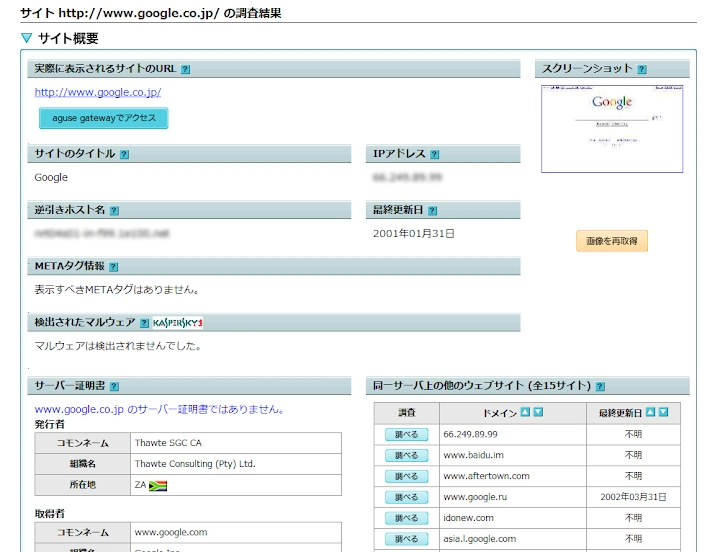
The software is designed to help users determine whether a currently open webpage is safe for interaction. Its primary function is to assess the security status of a web page in real time, offering a quick verification method for users concerned about phishing, malware, or other online threats. This tool targets individuals and professionals who frequently browse the web and value a secure digital experience.
Developed by SafeWeb Labs, the software operates as a desktop utility that integrates with the user’s current browsing environment. It does not alter browser behavior but instead provides a standalone confirmation of a page’s safety. The tool is particularly useful in scenarios where users receive suspicious links via email, messaging apps, or social media and need immediate validation before clicking.
Given its release date of August 25, 2015, the software has been in use for over eight years. While the developer has not provided details on updates or ongoing maintenance, the tool remains relevant for users seeking a basic, no-frills approach to web safety verification. It is suitable for both casual users and professionals managing digital security across multiple devices.
Key Features & Capabilities
- Real-time page safety verification – The software analyzes the current webpage to determine if it poses a known security risk, such as hosting malicious scripts or redirecting to unsafe domains.
- Lightweight desktop integration – Designed to run without significant system impact, the tool operates independently of the browser and does not require installation of additional plugins.
- Simple user interface – The interface is minimal, allowing users to initiate a safety check with a single action, such as a button click or keyboard shortcut.
- Compatibility with major browsers – The software supports both Windows and Mac platforms, enabling consistent functionality across different operating systems.
- Offline safety checks – The tool performs checks using locally stored threat intelligence, reducing dependency on real-time internet connectivity.
These capabilities allow users to quickly validate the legitimacy of a webpage without relying solely on browser warnings. For example, when receiving a link from an unknown sender, users can launch the tool and verify the target URL’s safety before proceeding. Similarly, professionals managing digital communications may use it as a secondary validation step during routine security checks.
User Interface, Workflow & Performance
The user interface is described as minimal and functional, focusing on ease of access and immediate usability. Navigation is straightforward, with a central control panel that allows users to initiate a safety check with minimal steps. The workflow is designed to be completed in seconds, aligning with the tool’s purpose of providing rapid feedback.
Performance details were not specified by the developer. However, given the software’s file size of 2.5 MB and its standalone nature, it is expected to consume minimal system resources. The developer did not provide information on CPU or RAM usage, nor did they detail stability under prolonged use.
Users can expect a responsive interface during operation, though exact performance behavior may vary based on system configuration. The tool does not appear to require background processes, which supports efficient resource management. Stability observations are based on general software behavior patterns, as no official reports on crashes or errors were provided.
Compatibility & System Requirements
The software is compatible with both Windows and Mac operating systems, as specified in the product details. The version number is listed as 1.0, and the installation size is 2.5 MB, indicating a compact footprint suitable for devices with limited storage.
Exact system requirements were not listed by the developer. Compatibility with specific Windows or macOS versions is not confirmed. The developer did not provide information on minimum processor speed, RAM, or disk space requirements. Users are advised to test the software on their system to ensure proper functionality.
Given its age and lack of recent updates, users should exercise caution when deploying the software on modern systems, particularly those with updated security policies or sandboxing environments. The absence of recent development activity may affect long-term compatibility with newer operating system versions.
Pros and Cons
Pros
- Lightweight design with minimal system impact
- Simple and fast interface for immediate safety checks
- Available at no cost, making it accessible to all users
- Supports both Windows and Mac platforms
- Operates offline using local threat data
Cons
- No recent updates since 2015; potential compatibility issues with modern OS versions
- Developer did not provide detailed system requirements
- Limited information on threat intelligence sources or update frequency
- No visible feedback on check results beyond basic status indicators
- Unsupported in current security landscapes without ongoing maintenance
FAQ Section
Is the software compatible with Windows and Mac?
Yes, the software is designed to run on both Windows and Mac operating systems, as confirmed by the developer.
Is the software safe to use?
The software is provided by SafeWeb Labs and does not require administrative privileges to operate. However, users should exercise caution when downloading and running software from third-party sources, especially those with no recent updates.
Does the software require an internet connection?
The tool can perform safety checks offline using locally stored threat data. However, periodic updates to the threat database may require internet access.
How often is the software updated?
The last update was released on August 25, 2015. The developer has not provided information on future updates or maintenance plans.
Can I use this tool without installing browser extensions?
Yes, the software operates as a standalone desktop application and does not require the installation of browser extensions or plugins.
Final Thoughts + CTA
While the software offers a straightforward approach to verifying web page safety, its age and lack of recent development raise concerns about long-term reliability. The lightweight design and zero cost make it accessible, but users should be aware of potential compatibility limitations on modern systems. For those seeking a no-frills, offline safety check, it may still serve as a basic tool. However, it is not recommended for users requiring up-to-date threat intelligence or modern security protocols.
For professionals and individuals who prioritize secure browsing, this tool provides a simple verification step—though it should be used with awareness of its limitations. Given the evolving threat landscape, users are encouraged to consider more actively maintained alternatives.
Download SafeWeb Labs’ Page Safety Tool now.